


Reflections on ADOMS III Conference—Current & Comprehensive TMJ & Related Skeletal Treatment
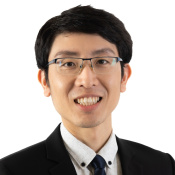
Article from Indonesia
Interview with Kalia Labitta Yudhasoka (KLY) conducted by Timothy, Sng (TS), Member, Face to Face® Editorial Committee
TS: Congratulations on a very successful event ADOM III Conference on the theme of “Current & Comprehensive Temporomandibular Joint and Related Skeletal Treatment” held in Dec 2025. Looking back a few months later, what stood out to you the most about the ADOMS III conference & workshops?
KLY: Thank you so much, Timothy. Honestly, when I look back one month later, what stays with me the most is the feeling in the room and the energy.
ADOMS III was not just another conference. It was the first large-scale meeting in our region that truly focused on TMJ in a comprehensive way. That alone made it special. We weren’t just touching on TMJ as a small topic within a broader program it was the core of everything.
Seeing colleagues from different countries come to Bandung with the same passion for TMJ was incredibly meaningful. The discussions were lively, the questions were thoughtful, and even after sessions ended, people stayed back to continue talking. That tells me the topic really resonated.
The hands-on workshops were also unforgettable. You could see how eager everyone was not just to listen, but to really learn, to practice, to refine techniques. For many participants, this was their first structured exposure to in depth TMJ training at this level. That excitement made all the hard work worth it.
|
TS: From your perspective as organising chairperson, what made this conference particularly successful? (was it the scientific content, line up of speakers, hands-on training, regional collaboration, etc?)
KLY: I truly believe the success of ADOMS III came from a strong combination of scientific quality and extraordinary teamwork behind the scenes. From the beginning, we were very intentional in designing the program. We wanted it to be comprehensive, practical, and clinically relevant. TMJ was not treated as a side topic it was the center of discussion. The sessions covered the full spectrum, from pediatric cases to complex reconstruction, arthroscopy, joint replacement, and multidisciplinary management. That clarity of focus gave the conference a strong identity.
The speaker lineup was another key factor. We brought together experienced surgeons and experts who were not only leaders in their field, but also generous in sharing their knowledge. Speakers were approachable, discussions were interactive, and that made a big difference. And of course, the hands-on component was essential. As surgeons, we learn best when we can see and do. The cadaveric and practical sessions were very well received.
But honestly, none of this would have been possible without the organizing committee. The team worked tirelessly for months often behind the scenes, solving problems that most participants never even knew existed. There were countless details to manage. What impressed me the most was the spirit within the team. Even during challenging moments, the atmosphere remained supportive and solution-oriented. That sense of unity made a huge difference.
|
TS: What emerging trends or techniques in TMJ surgery generated the most interest during the conference?
KLY: Arthroscopy definitely generated a lot of interest. Many participants wanted to understand not just the technique itself, but when to use it, how to select cases properly, and how to integrate it into their practice.
Total joint replacement and reconstruction strategies were also major highlights, especially in complex deformities and hyperplasia cases. There were many discussions about patient-specific solutions and long-term outcomes.
What I found encouraging is that the conversation has shifted. Surgeons are thinking beyond just “fixing the joint.” We are talking about function, occlusion, facial balance, long-term stability, and multidisciplinary care. That broader perspective shows that TMJ surgery is evolving in a very positive direction.
|
TS: Can you tell us more about the establishment of the Asian Society of TMJ Surgeons? And what role do you see this society play in shaping regional standards or guidelines for TMJ surgery?
KLY: The formation of the Asian Society of TMJ Surgeons was truly one of the most meaningful outcomes of ADOMS III. It happened very organically. During discussions, it became clear that many of us share similar challenges, yet we rarely have a dedicated platform to collaborate at a regional level.
Asia has a large patient population and tremendous clinical experience. However, training pathways and standards can vary significantly between countries. The society aims to create a bridge a platform for collaboration, research, training exchange, and eventually consensus building.
I hope the society can help develop practical, evidence-based guidelines that are relevant to our region. I also hope it becomes a supportive network for younger surgeons who want to focus on TMJ.
For me personally, it represents something bigger than just an organization. It represents unity and a shared commitment to elevate TMJ care in Asia. ADOMS III may have been the starting point, but I believe this is just the beginning of a much larger journey.
|
TS: Thank you for sharing your insights and reflections. Congratulations again on the success of the conference! We look forward to hearing more from the Asian Society of TMJ Surgeons — it marks an important milestone for TMJ care in the region.
|


Comments